
A Letter to the Church That Has Forgotten Its Center
A Letter to the Church That Has Forgotten Its Center
To the church I love, and to the people who gather in the name of Christ:
There are truths we must face with humility, not defensiveness; with Scripture, not emotion; with honesty, not performance. Jude wrote to believers who were drifting — not because they were rebellious, but because they were unguarded. Drift is quiet, it is subtle, it happens when good intentions replace biblical foundations. Jude urged the church to remember the warnings. They should keep themselves in the love of God. They need to show mercy to those who doubt. They must contend for the faith once delivered to the saints. His words speak directly into our current moment.
This letter is not about one group, one ministry, or one situation. It concerns a pattern. This pattern represents a slow cultural shift. In this shift, programs, personalities, and preferences begin to shape the church more than Scripture does. When I speak of “programs,” I do not mean a single ministry. Programs can be anything. They include study lessons, addiction recovery, discipleship tracks, outreach efforts, or any structured system. These systems are designed to help people grow. Programs are not the problem. People are. And when people elevate systems, leaders, or methods above the Word of God, the church loses its center.
We cannot pick the parts of Scripture that suit us and ignore the parts that confront us. We can’t shape the Bible around our culture and call it truth. We cannot exalt one group and overlook the rest of the body and call it ministry. We can’t claim to be a family while practicing favoritism, silence, and indifference.
We must be honest about this. If we cannot clearly point to Scripture to support a belief, we should not teach it. We should not condone it. We should not pass it on as truth, especially concerning the Holy Spirit. The Spirit of God does not need our embellishment, our assumptions, or our traditions. He speaks through the Word He inspired. And if the Word does not say it, then we have no authority to declare it. Anything we build apart from Scripture becomes culture, not truth; emotion, not doctrine; preference, not obedience. The church must return to what is written, not what is assumed.
We have begun to exalt the stories of where people came from. It is as though the pit is the point of the testimony. The Spirit of God does not glorify the darkness from which we were rescued. He glorifies the Deliverer who shattered its hold. If the past is the main focus, Christ is pushed to the margins. We celebrate human journeys more loudly than His redemption. We trade the glory of the Cross for the applause of men. The Lord is calling us back to a gospel that magnifies Him alone. It focuses not on the mud He pulled us out of, but on the Majesty of the One who saves.
Some call the church a family. But how can we call ourselves a family when we are partial to some and indifferent to others? A family cannot exist where favoritism lives. Scripture commands us to bear one another’s burdens, not elevate one group while ignoring the rest.
And let us be honest about something we rarely say aloud: We claim to applaud “the One who transforms.” However, our actions reveal otherwise. When we stand people up, we spotlight them. We clap for them and center them. As a result, the applause shifts from Christ to the person. Testimony becomes elevation. Celebration becomes hierarchy. And the rest of the body becomes invisible. If we truly honored Christ alone, then every believer’s quiet endurance would matter. It would hold just as much importance as the stories we parade. Every unseen act of faith would be equally significant. Every hidden repentance would hold the same value. Every private victory would be as important. But we have not honored the whole body — only the parts that fit our narrative.
When I use the word “graduation,” I simply mean the completion of a program — nothing more and nothing less. Finishing something hard is meaningful. We can thank God for giving someone the strength, clarity, and endurance to complete what they began. In that sense, yes, God deserves the glory for every step of perseverance. But graduation itself is not a miracle, not deliverance, not evidence of spiritual authority, and not proof of transformation. It is a milestone of discipline, not a measure of spiritual power. Deliverance belongs to God alone, and we must not confuse human completion with divine rescue.
Some may ask whether it was God who began the work in someone or whether the person began it themselves. Scripture teaches that God begins the work and people respond to it. We cannot see the invisible root of God’s work — we only see the visible fruit of human choices. But even when God gives the desire to change, the completion of a program is still not deliverance. Graduation is simply the end of a curriculum, not the evidence of spiritual transformation. Deliverance belongs to God alone.
Jesus told us to forgive seventy times seven. This is not to enable sin, not to avoid correction, and not to abandon those who struggle. It is to keep our hearts soft as we walk with people toward truth. Forgiveness is continual, but so is discipleship. We do not decide that someone is “too much” or “too far gone.” We do not drop them when they stumble. We help them see. We restore them gently. We go to them. Christ commanded us to go into all nations. Nations include the people next door, down the street, around the corner, and across the world. The church is called to encourage, not enable. It is called to disciple, not discard. It is called to walk with the weak, not retreat into comfort.
We must also guard our hearts against idolatry. This includes not only the obvious kind but also the subtle kind that grows unnoticed. A program becomes an idol when it becomes identity. It becomes the measure of spirituality. It becomes the filter for who belongs. It becomes the center of the church. Past sin becomes an idol when it is repeated constantly. It is used as a badge. It is elevated as a testimony of self rather than a testimony of Christ. Anything that takes the place of Scripture becomes an idol. Anything that becomes the lens through which we view people becomes an idol. Anything that becomes the standard of belonging becomes an idol.
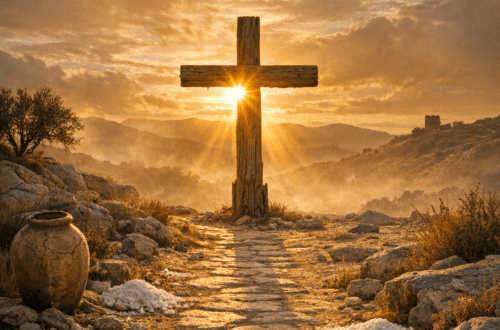
We must face the truth that no one stands above another in the eyes of God. The ground is level at the foot of the cross. Every one of us stands on it — the mass murderer and the monk, the addict and the elder. The broken and the polished stand there as well. So do the long-time believer and the one who barely knows His name. No testimony makes a person superior. No position makes a person untouchable. No title places anyone beyond correction. If anyone reads these words and assumes they do not apply to them, they are mistaken. That assumption reveals the very drift Jude warned us about. Even I am not exempt. We are all sinners covered by the same blood, upheld by the same grace, and dependent on the same Savior. This is not a local issue. Nor is it a small matter. It is global and stretches across nations and cultures. It touches every human heart, both believer and unbeliever alike.
We must return to biblical definitions. Deliverance is not graduation from a program — it is the rescuing work of God alone. Discipleship is not conformity to a system — it is transformation by the Spirit. Mercy is not tolerance — it is restoration with truth. Leadership is not elevation — it is servanthood. Correction is not condemnation — it is love in action. Restoration is not abandonment — it is walking with the weak until they are strong again.
Somewhere along the way, we began to confuse human participation with divine power. God may use any of us as vessels in prayer. He may use us in encouragement and in presence. Yet, He alone is the Deliverer. No human touch, no human authority, and no human system carries the power to free a soul. The power belongs to God and not to us. When people begin to speak or act as though God is working through them in unscripted ways, the church must return to the truth. The correction should be both gentle and firm.
And we must remember this with fear and humility: no person can force belief, produce repentance, or deliver another soul. Only the Lord saves. Only the Lord heals. Only the Lord transforms. We are vessels. We are nothing more and nothing less. We are jars of clay carrying a treasure that does not belong to us. When we act as though we can produce spiritual outcomes, we step into a role that belongs to God alone. Our calling is obedience, not control; faithfulness, not force; witness, not ownership. Every true work is the work of the Spirit, and every victory belongs to Christ.
And if we are honest, we all need the Spirit to search us. We need Him to expose the things we have ignored, avoided, or quietly excused. These are the places where we assumed the truth applied to someone else but not to us. We need Him to uncover the blind spots we protected. We need Him to reveal the attitudes we justified. We also need Him to acknowledge the pride we refused to see. Without His correction, we drift into the very arrogance we condemn in others. With His correction, we return to humility, repentance, and the fear of the Lord.
No one is better.
No one is higher.
No one is more spiritual.
No one is more deserving.
We are all dust.
We are all sinners.
We are all dependent on the same Savior.
We are all upheld by the same grace.
Christ Himself would not be impressed if He walked into our gatherings today. Our programs would not move Him. Our performances and elevated cultures would also fail to impress. He would look for humility, for repentance, for mercy, and for truth. He would look for a people who know that He alone is the center.
Because without Him, we have nothing.
And without Him, we are nothing.
May we have the courage to see ourselves clearly
and the humility to change.
For the glory of God alone.
— End of Letter —
My Dearest Father, God,
Maker of heaven and earth,
the God who sees every heart. You know every hidden place —
we come before You not as the righteous.
We come as those who desperately need Your mercy.
We lift up Your church across the whole world —
the seen and the unseen,
the known and the forgotten,
the gathered and the scattered,
the free and the confined,
the celebrated and the overlooked.
For You alone know the full story of every soul.
We pray for the ones who stand in pulpits
and the ones who sit in silence.
For the ones who feel strong
and the ones who feel like outcasts.
For the ones who have fallen
and the ones who pretend they haven’t.
For the ones who are praised
and the ones who are invisible.
For the ones who have been wounded by the church
and the ones who have wounded others.
We pray for every person —
from the mass murderer to the monk,
from the addict to the elder,
from the prisoner to the pastor,
from the broken to the proud,
from the ones who know Your name
to the ones who curse it.
For we are all Your children,
all made from the same dust,
all in need of the same Savior.
Lord, search us.
Expose what we have ignored, excused, or refused to see.
Break the pride that blinds us.
Heal the wounds we’ve caused.
Restore what we have lost.
And bring us back to the feet of Jesus,
where no one is higher than another
and no one stands without grace.
Teach us to love truth more than comfort,
Scripture more than culture,
repentance more than reputation,
and Christ more than anything else.
Make Your church a place of mercy again.
Make it a place of humility again.
Make it a place of truth again.
Make it a place where the broken are restored
and the proud are humbled
and the lost are found
and the name of Jesus is lifted above every story,
every program,
every personality,
every preference,
and every tradition.
For Yours is the kingdom,
and the power,
and the glory —
forever and ever.
In the mighty and merciful name of Christ Jesus.
Amen.
Scripture referenced
- God shows no partiality
Romans 2:11, Acts 10:34, James 2:1
calls out favoritism - All people fail — not God
Romans 3:23, Isaiah 53:6, 1 John 1:8
The issue is the human heart - Christ alone transforms, saves, heals, and delivers
John 15:5, Psalm 3:8, Zechariah 4:6, John 6:44, 2 Corinthians 4:7
People are vessels - The church must return to Scripture, not assumptions
2 Timothy 3:16–17, Acts 17:11, Mark 7:6–8
warns against teaching what the Bible does not say - The Spirit exposes what we ignore
Psalm 139:23–24, John 16:8
calls for the Spirit to search us - Christ confronts religious culture when it drifts
Matthew 21:12–13, Matthew 23
Jesus overturning tables - The ground is level at the foot of the cross
Romans 3:22–24, Ephesians 2:8–9
No one is higher - Programs, traditions, and systems can become idols
Colossians 2:8, Galatians 1:6–10, Revelation 2–3
warns about elevating systems - The church must repent when it drifts
Revelation 2:5, 1 Peter 4:17
calls for humility and repentance - Every victory belongs to Christ alone
1 Corinthians 1:29–31, Psalm 115:1
“For the glory of God alone.”
“Salvation belongs to the Lord.” (Psalm 3:8)
“Apart from Me you can do nothing.” (John 15:5)
“Not by might, nor by power, but by My Spirit.” (Zechariah 4:6)
“The Lord is the one who sanctifies you.” (Leviticus 20:8)
“It is God who works in you to will and to act.” (Philippians 2:13)
“No one can come unless the Father draws him.” (John 6:44)
“We are jars of clay… the power belongs to God and not to us.” (2 Corinthians 4:7)

Discover more from CH Unlimited Ventures LLC
Subscribe to get the latest posts sent to your email.


You May Also Like

The Holy Spirit: A Scripture-Based, Culturally Rooted, Character-Consistent Perspective from Genesis to Revelation
When We Step Into What God Never Asked